
The Herald: Opening of EnergyPathways Aberdeen HQ
The Herald: The £1bn energy project that isn't in Scotland but is coming to Aberdeen
Aberdeen's offshore energy industry: EnergyPathways says the expertise and supply chains built up around the North Sea sector were behind its decision to establish its operational headquarters in the city
The Marram Energy Storage Hub, or MESH, is planned for the East Irish Sea, around 11 miles off the Lancashire coast, but developer EnergyPathways has chosen Aberdeen as the engineering and operational base from which to help take the project forward.
And while MESH itself will be built off the Lancashire coast, its location potentially puts it in a position to help address a distinctly Scottish problem: wind farms being asked to reduce output when the electricity network cannot carry all the power they generate south.
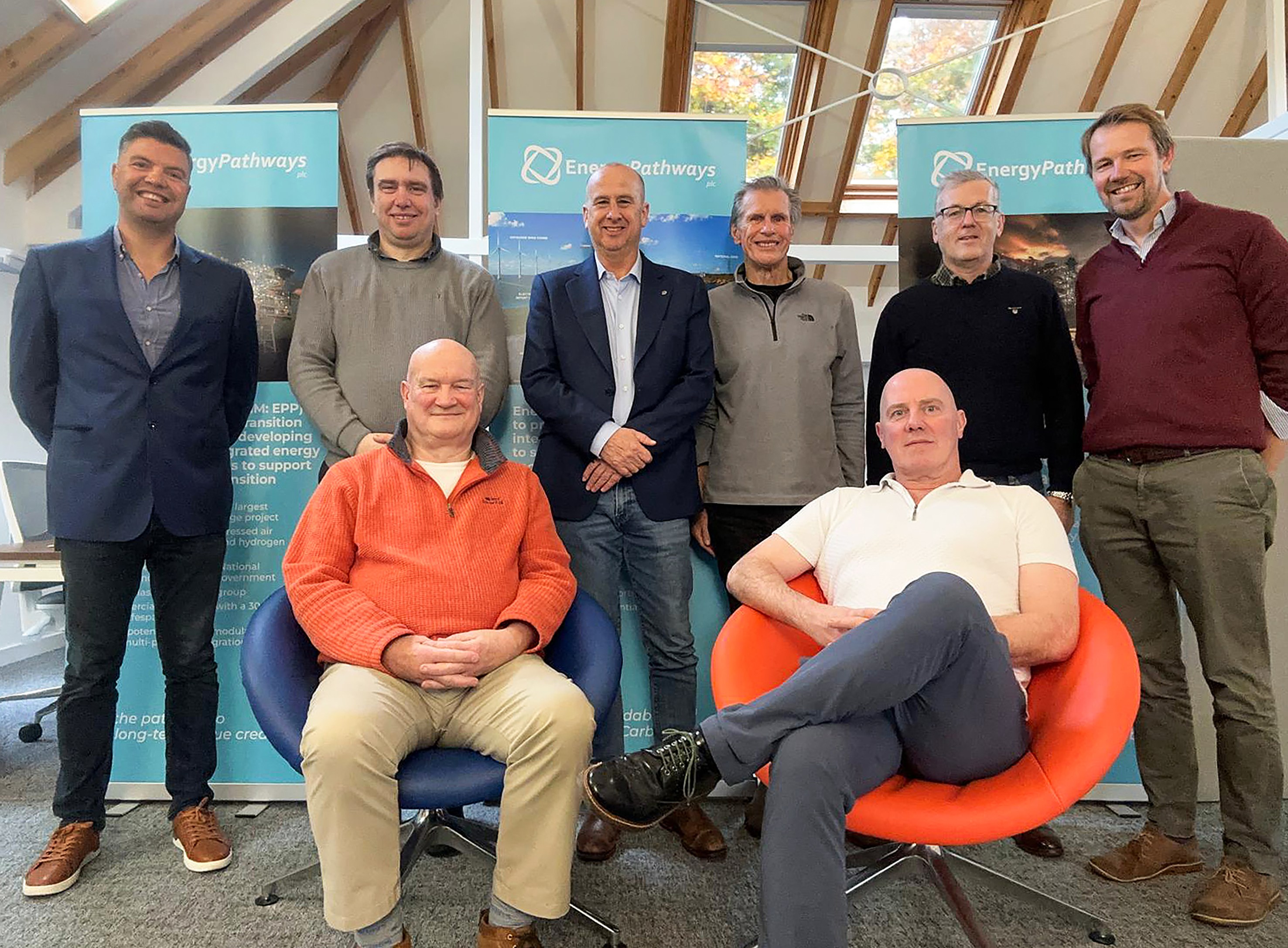
The EnergyPathways team at its new Aberdeen headquarters, established as the company progresses the proposed £1bn MESH energy storage project (Image: Supplied)
Ben Clube, chief executive of EnergyPathways, said the decision to establish the headquarters in Aberdeen reflected the importance of skills and supply chains developed over decades by the offshore oil and gas industry.
"The MESH project is a project that's going to heavily rely on UK supply chains and the offshore oil and gas industry-type capabilities," he said. "The reason why we're setting up in Aberdeen and in Scotland is to utilise all the great experience and supply chains of the offshore sector."
EnergyPathways currently has a team of 10 and expects this to grow as MESH progresses through front-end engineering and design, the detailed work undertaken before a final investment decision.
The company is already operating from its new Aberdeen headquarters, which will be formally opened on Thursday with a ribbon-cutting event involving members of the local community. Mr Clube said staff were already "hard at it" working from the base.
EnergyPathways is working with Aberdeen-based engineering businesses Wood and Zenith, which are respectively its lead engineering and well engineering partners.
MESH represents potential capital investment of up to £1bn and is designed to combine natural gas storage, hydrogen storage and compressed-air energy storage. A key part of the proposition is its ability to make use of surplus renewable electricity when generation exceeds what can be accommodated by the grid.
Mr Clube said its location would allow the development to make use of wind power generated in Scotland and store energy for use when renewable output was lower.
"Our asset is really well located to harness surplus Scottish wind, pack that in as long-duration storage, and then dispatch it to the demand centres to the south when wind is not available or is in short supply," he explained.
The system would use surplus power to compress air for storage. When electricity is needed, the compressed air could be released with hydrogen or natural gas to drive a turbine and generate power.
The Aberdeen move may also ultimately have implications for projects much closer to the new headquarters.
Mr Clube said EnergyPathways has identified other locations with the necessary geology and was examining the possibility of deploying the technology in Scottish waters. He declined to identify where the company is looking because the work remains confidential, but said he is hopeful there could be news about progressing a Scottish development within a year.
However, MESH itself must still clear a series of significant hurdles before construction can proceed.
EnergyPathways is seeking support through the UK Government's cap-and-floor mechanism for long-duration energy storage, and also needs to secure a grid connection and financing before reaching a final investment decision. Mr Clube said the development would principally be debt-financed, although EnergyPathways would also consider public investment.
The company is targeting 2030 or 2031 for MESH to become operational, but Mr Clube acknowledged the timetable would depend partly on planning, government approvals and the development of the policy and regulatory framework.
"Those estimates are based on our operational and technical view of what we can do," he said. "We'll definitely go as fast as the government goes with clarifying policy and regulatory frameworks."
Read the article here: https://www.heraldscotland.com/news/26732460.1bn-energypathways-project-brings-new-base-aberdeen/